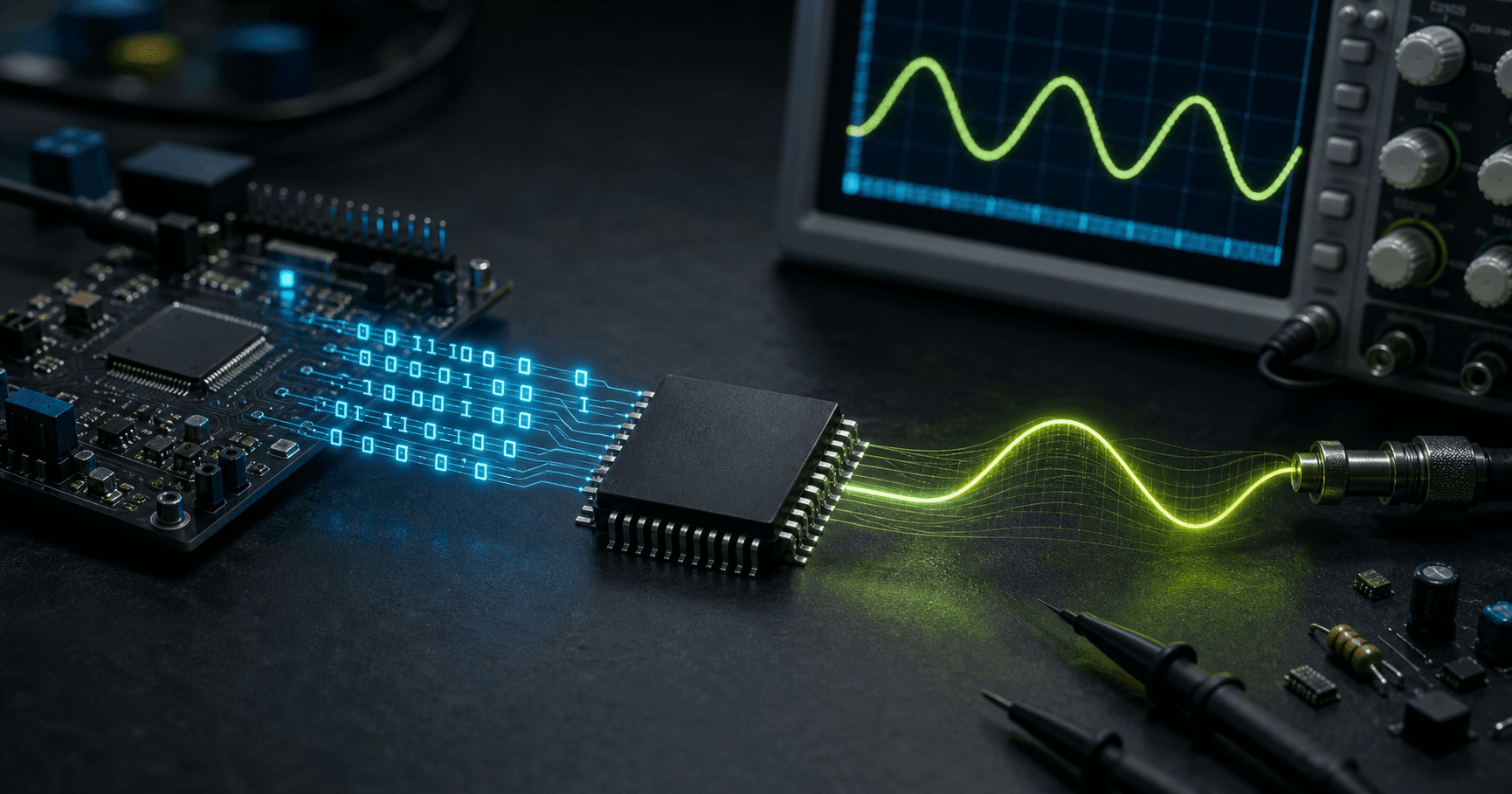
How DAC Works: Direct Definition
- [How DAC Works] [connects] [circuit theory to practical wiring]
- [how DAC works] [improves] [debugging accuracy and component selection]
- [Volt X guides] [link] [related tools, sensors, and embedded systems]
What a DAC Actually Outputs
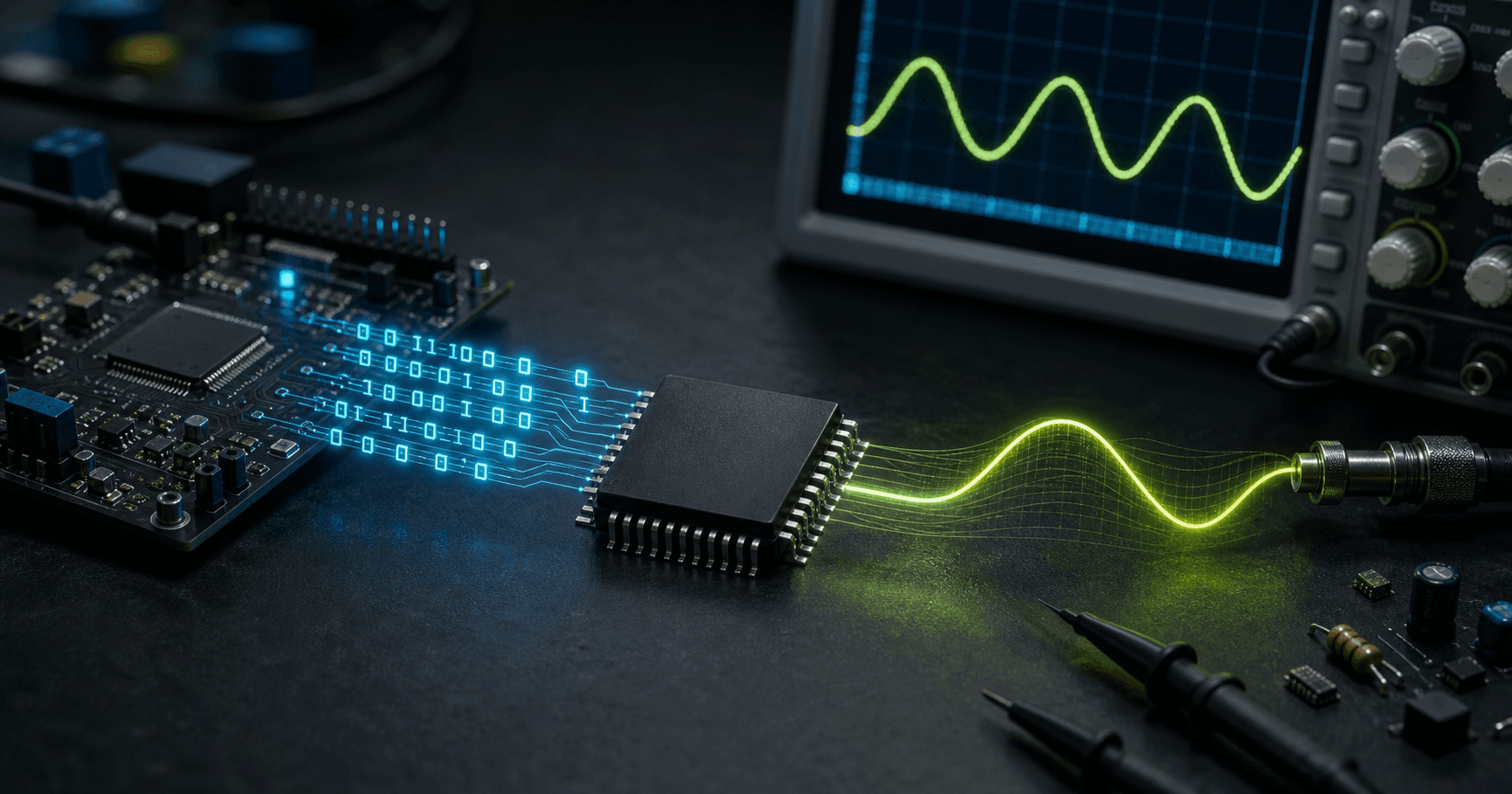
A digital to analog converter maps a binary number to a proportional analog level. In a voltage-output DAC, code zero usually maps near ground and the maximum code maps near a reference voltage. The output is not magic continuous information; it is a staircase of discrete levels that becomes useful when the step size is small enough for the application.
DAC Architectures in Plain English
An R-2R ladder uses matched resistors and switches to create weighted voltages. A string DAC selects a tap from a resistor chain. Sigma-delta DACs switch rapidly and filter the result. Many microcontroller projects fake a DAC with PWM plus a low-pass filter, trading response speed for simplicity.
Resolution, Settling Time, and Load
Resolution controls the smallest output step, but settling time controls how quickly the output reaches that value. If the DAC drives a heavy load directly, the voltage can sag or distort. Precision systems often place an op-amp buffer after the DAC so the converter sees an easy load while the circuit receives a low-impedance analog output.
Where DACs Show Up
DACs are used for audio output, waveform generators, programmable references, motor control setpoints, LED dimming references, and calibration voltages. The right DAC depends on whether you need accuracy, speed, low noise, or just a smooth control voltage.
Parts and Modules Availability in India
For student labs and prototype builds in India, look for the exact voltage rating, interface level, package type, and module quality before buying. SP Road in Bangalore, Lamington Road in Mumbai, Lajpat Rai Market in Delhi, Ritchie Street in Chennai, Koti in Hyderabad, Budhwar Peth in Pune, and Chandni Chowk Market in Kolkata commonly stock beginner-friendly modules and passives.
Frequently Asked Questions
What does a DAC do?
A DAC converts a digital code into a proportional analog voltage or current. The output depends on the reference voltage, converter architecture, load, settling time, and whether the signal needs filtering or buffering.
Why does DAC resolution matter?
It matters because small interface decisions can change accuracy, reliability, safety, and debugging time. Understanding the fundamentals helps you choose values, modules, and wiring methods intentionally.
What is the most common DAC design mistake?
The most common mistake is treating the circuit as ideal. Real components have limits such as input impedance, noise, timing, voltage ratings, heating, drift, or contact behavior.
Can beginners use this in Arduino projects?
Yes. Start with a low-voltage breadboard setup, verify ratings, use conservative resistor values or modules, and test one signal at a time before connecting expensive boards or high-power loads.
Conclusion
How DAC Works becomes much easier when you separate the ideal idea from the physical limits. Use the specs above, test with conservative values, and connect this topic with related Volt X guides before scaling a prototype into a finished build.