How Voltage Dividers Work: Direct Definition
- [How Voltage Dividers Work] [connects] [circuit theory to practical wiring]
- [how voltage dividers work] [improves] [debugging accuracy and component selection]
- [Volt X guides] [link] [related tools, sensors, and embedded systems]
The Voltage Divider Formula
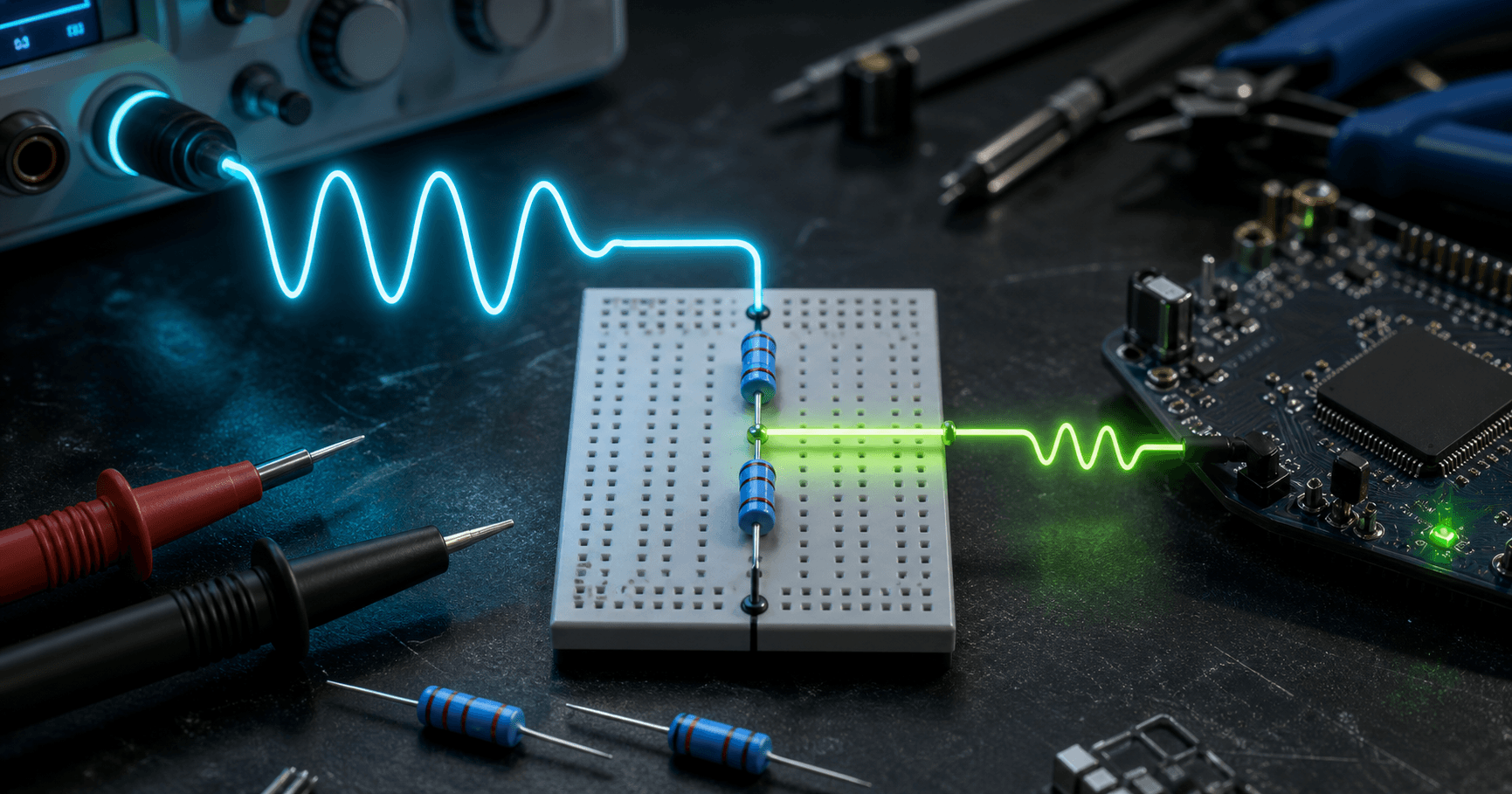
A voltage divider uses two resistors in series. The output is taken from the midpoint. Because the same current flows through both resistors, the voltage drop across each resistor is proportional to its resistance. The lower resistor sets the fraction that appears at Vout.
Why Dividers Are Not Power Supplies
A divider can create a voltage, but it cannot hold that voltage when the load current changes. If you connect a real load, the load resistance sits in parallel with the lower resistor and changes the ratio. Use dividers for sensing and references; use regulators for powering circuits.
Measuring Battery Voltage with an ADC
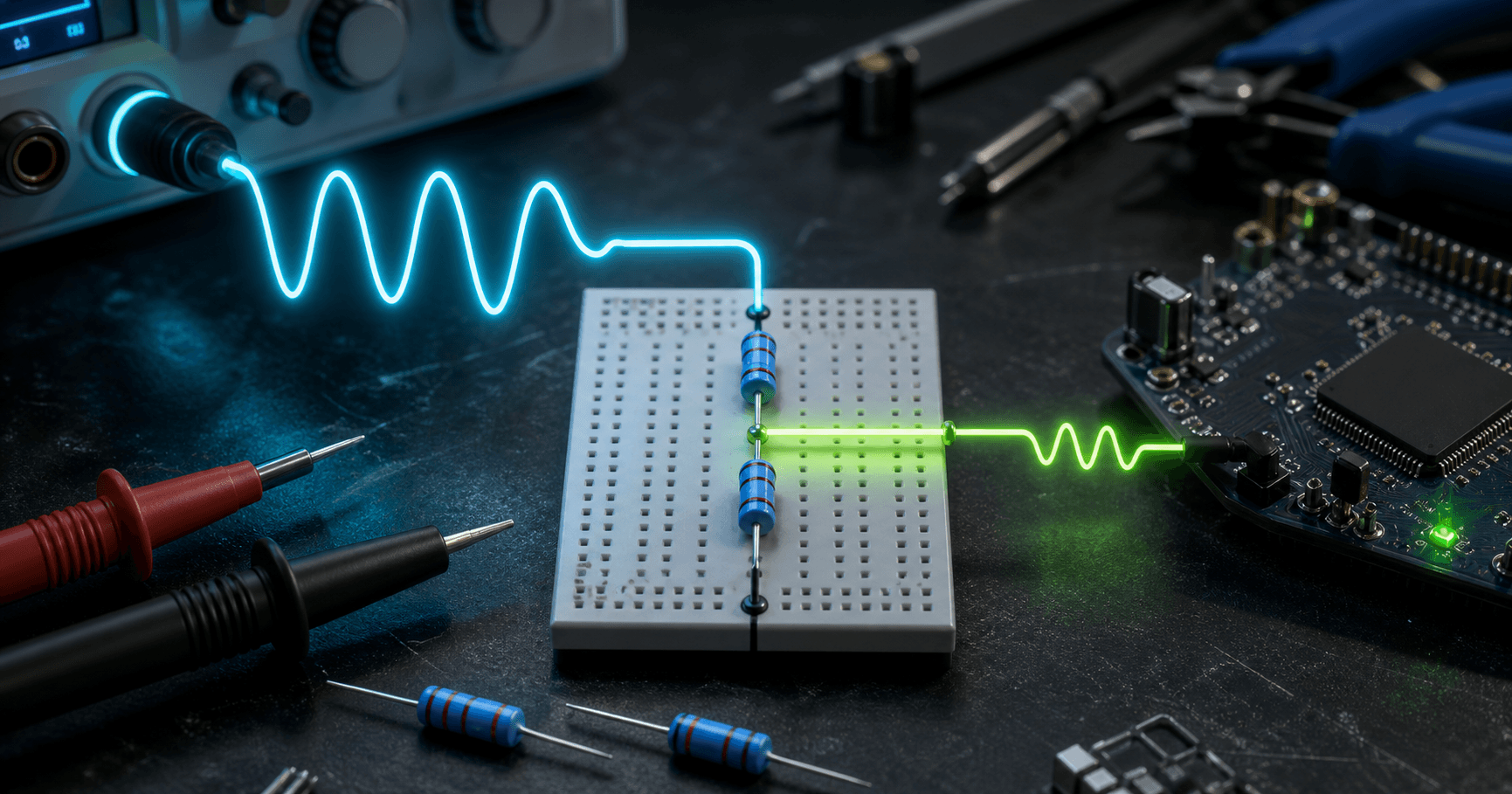
A common use is scaling a battery voltage into a microcontroller ADC range. For example, a 2:1 divider can reduce 8.4 V from a 2-cell LiPo to 4.2 V, still too high for a 3.3 V MCU, so the ratio must be chosen carefully. Add a small capacitor at the ADC node to reduce noise.
Choosing Resistor Values
Very low resistor values waste current. Very high values make the ADC input slow and noisy. Battery monitors often use tens or hundreds of kilo-ohms plus a capacitor, while precision ADC inputs may need a buffer op-amp or lower source impedance.
Parts and Modules Availability in India
For student labs and prototype builds in India, look for the exact voltage rating, interface level, package type, and module quality before buying. SP Road in Bangalore, Lamington Road in Mumbai, Lajpat Rai Market in Delhi, Ritchie Street in Chennai, Koti in Hyderabad, Budhwar Peth in Pune, and Chandni Chowk Market in Kolkata commonly stock beginner-friendly modules and passives.
Frequently Asked Questions
What does a voltage divider do?
A voltage divider uses two resistors to produce a predictable fraction of an input voltage. It is useful for sensing and references, but it should not be treated like a power supply.
Why do voltage dividers matter in electronics?
It matters because small interface decisions can change accuracy, reliability, safety, and debugging time. Understanding the fundamentals helps you choose values, modules, and wiring methods intentionally.
What is the most common voltage divider mistake?
The most common mistake is treating the circuit as ideal. Real components have limits such as input impedance, noise, timing, voltage ratings, heating, drift, or contact behavior.
Can beginners use this in Arduino projects?
Yes. Start with a low-voltage breadboard setup, verify ratings, use conservative resistor values or modules, and test one signal at a time before connecting expensive boards or high-power loads.
Conclusion
How Voltage Dividers Work becomes much easier when you separate the ideal idea from the physical limits. Use the specs above, test with conservative values, and connect this topic with related Volt X guides before scaling a prototype into a finished build.