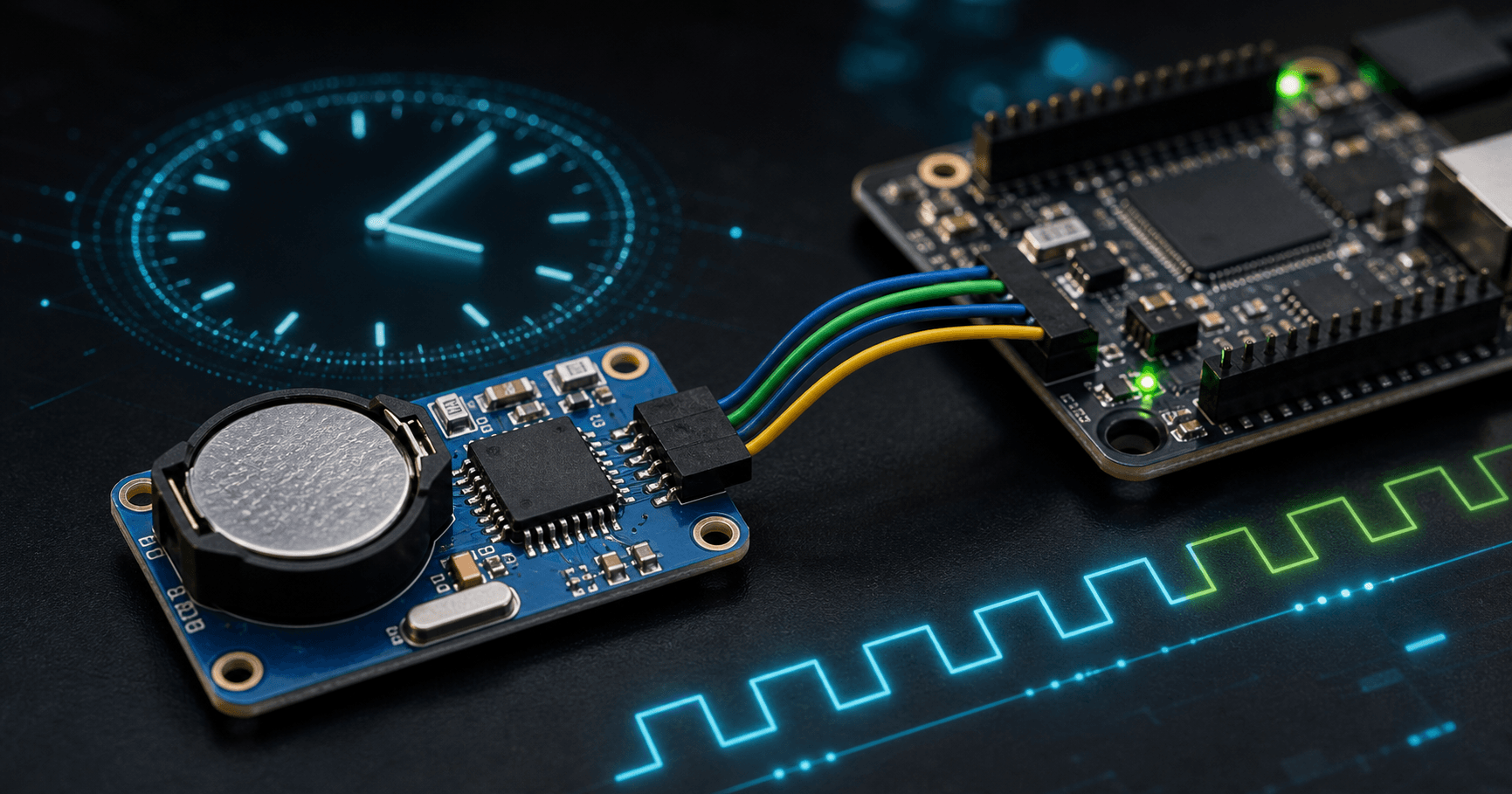
How RTC Modules Work: Direct Definition
- [How RTC Modules Work] [connects] [circuit theory to practical wiring]
- [how RTC modules work] [improves] [debugging accuracy and component selection]
- [Volt X guides] [link] [related tools, sensors, and embedded systems]
Why a Microcontroller Needs an RTC
A microcontroller can count milliseconds while it is awake, but it usually loses accurate wall-clock time after reset or power loss. A real-time clock module solves that by running a tiny oscillator from backup power and storing seconds, minutes, hours, date, month, and year in registers.
How the DS3231 Keeps Accurate Time
The DS3231 combines a quartz oscillator, temperature compensation, calendar logic, alarms, and I2C registers. Temperature compensation matters because ordinary crystals drift as temperature changes. The module keeps ticking from a coin cell when the main board turns off, so a data logger can wake up and timestamp readings immediately.
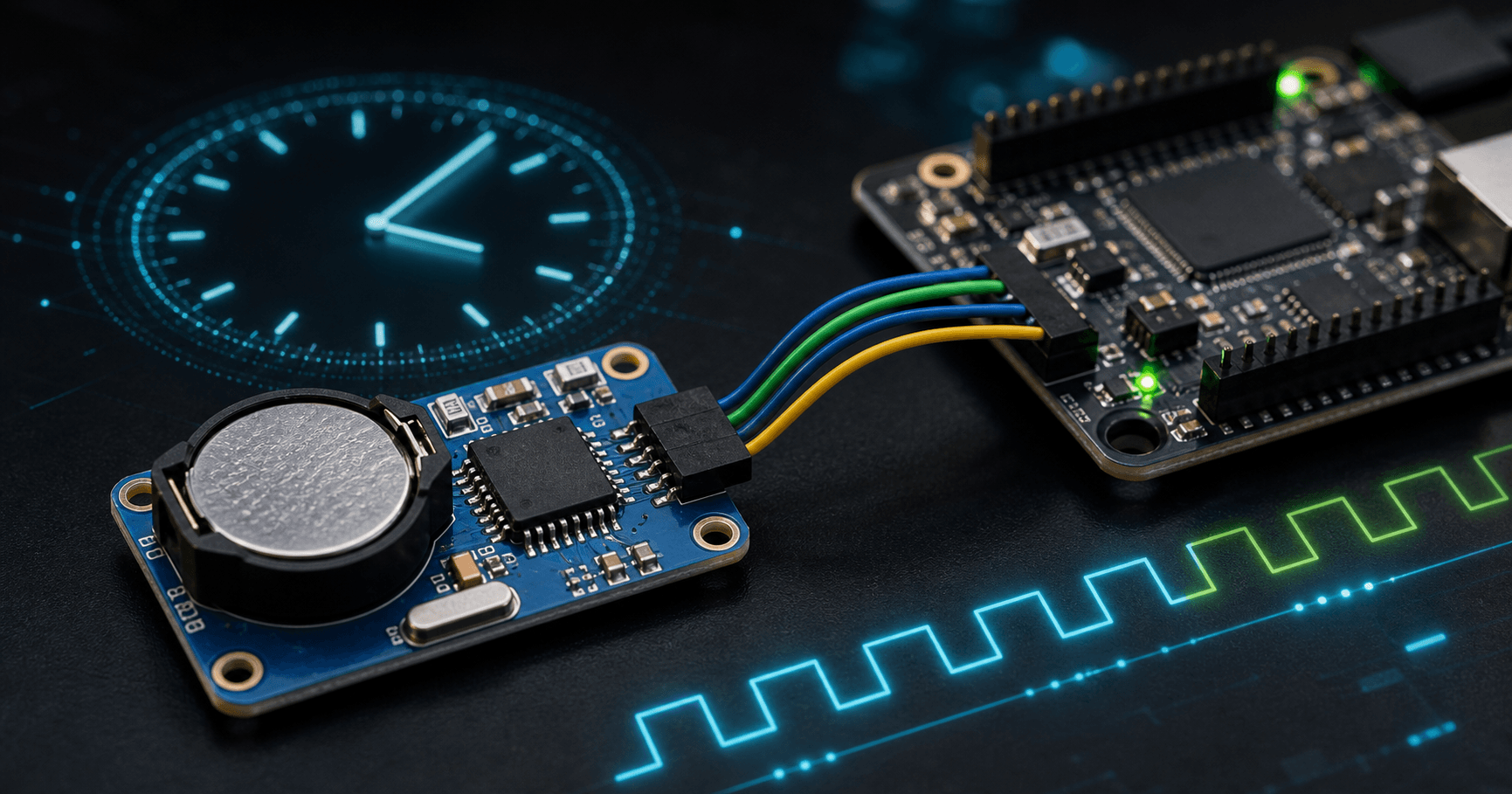
I2C Registers and Alarms
Most RTC modules expose time fields over I2C. Your code reads and writes registers rather than measuring time manually. Alarm registers can trigger an interrupt pin at a specific time, which is useful for low-power designs that keep the main controller asleep until a scheduled measurement is due.
Design Mistakes to Avoid
Do not assume every cheap RTC module charges the backup cell safely. Some boards include a charging circuit intended for rechargeable cells, which is wrong for a normal CR2032. Also keep I2C pull-ups at the correct voltage and set the clock once from a trusted source before deployment.
Parts and Modules Availability in India
For student labs and prototype builds in India, look for the exact voltage rating, interface level, package type, and module quality before buying. SP Road in Bangalore, Lamington Road in Mumbai, Lajpat Rai Market in Delhi, Ritchie Street in Chennai, Koti in Hyderabad, Budhwar Peth in Pune, and Chandni Chowk Market in Kolkata commonly stock beginner-friendly modules and passives.
Frequently Asked Questions
What does an RTC module do?
An RTC module keeps calendar time using a low-power oscillator and backup battery. It lets a microcontroller recover accurate timestamps after reset, sleep, or main power loss.
Why do RTC modules matter in electronics?
It matters because small interface decisions can change accuracy, reliability, safety, and debugging time. Understanding the fundamentals helps you choose values, modules, and wiring methods intentionally.
What is the most common RTC module mistake?
The most common mistake is treating the circuit as ideal. Real components have limits such as input impedance, noise, timing, voltage ratings, heating, drift, or contact behavior.
Can beginners use this in Arduino projects?
Yes. Start with a low-voltage breadboard setup, verify ratings, use conservative resistor values or modules, and test one signal at a time before connecting expensive boards or high-power loads.
Conclusion
How RTC Modules Work becomes much easier when you separate the ideal idea from the physical limits. Use the specs above, test with conservative values, and connect this topic with related Volt X guides before scaling a prototype into a finished build.