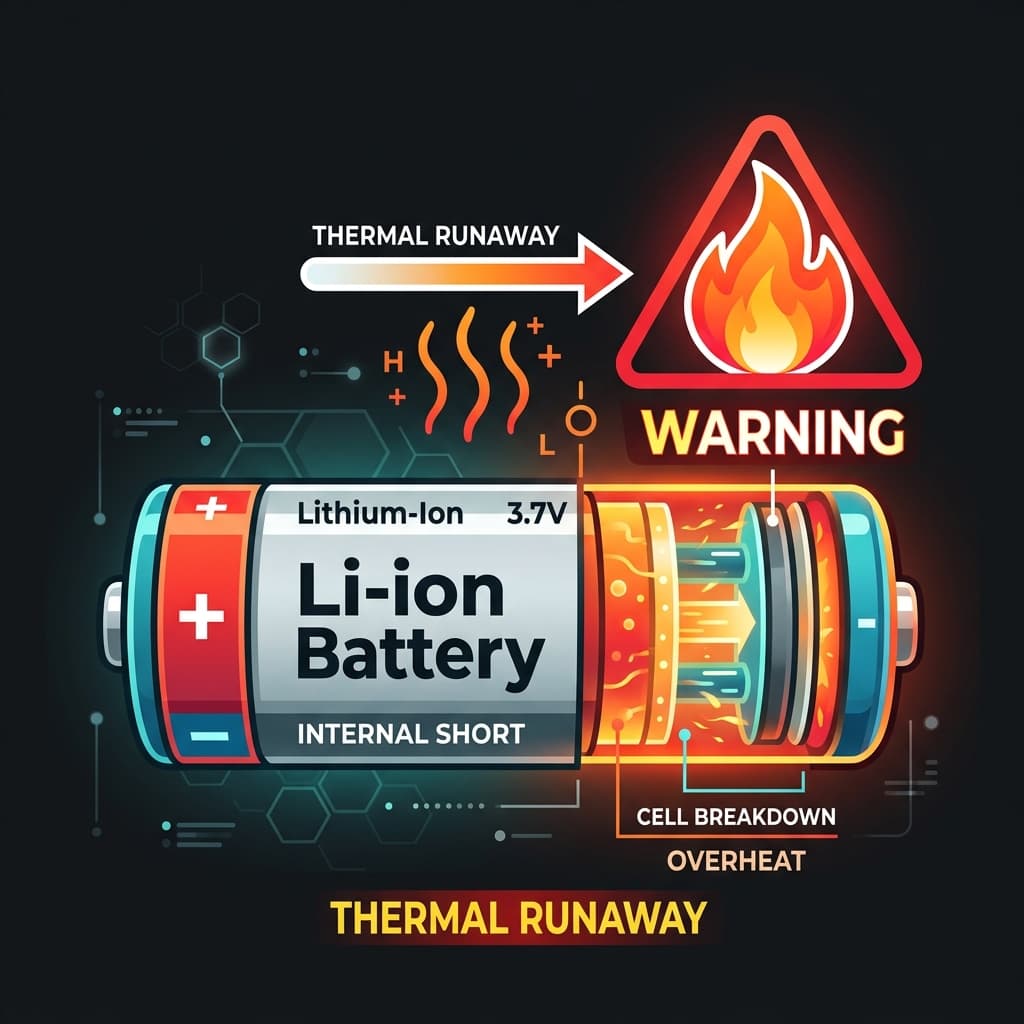
Lithium-ion batteries power everything from smartphones to electric vehicles. But why do lithium batteries explode, seemingly without warning? While these energy-dense power packs are generally safe, understanding the volatile chemistry inside them is critical for anyone building custom drones or hardware prototypes.
In this article, we will break down the anatomy of a lithium cell, explore the microscopic threats like dendrites, and explain the terrifying chain reaction known as thermal runaway that turns a quiet battery into a blowtorch.
The Anatomy of a Lithium-Ion Cell
To understand explosions, you must first understand the anatomy. A lithium-ion battery consists of three main components: a positive electrode (cathode), a negative electrode (anode), and a highly flammable liquid electrolyte that allows lithium ions to flow between them.
Crucially, the anode and cathode must NEVER touch. They are kept apart by a microscopically thin piece of perforated plastic called the separator. The separator allows ions to pass through while physically blocking the electrodes. If that separator fails, disaster strikes.
Thermal Runaway: The Unstoppable Chain Reaction
When the separator fails—due to physical puncture, extreme heat, or manufacturing defects—an internal short circuit occurs. The massive amount of stored electrical energy instantly converts into heat.
According to battery safety experts, when internal temperatures reach approximately 150°C to 200°C (300°F to 400°F), the battery enters a state called thermal runaway. The heat causes the chemical components to violently decompose, releasing oxygen and combustible gases. This self-sustaining fire provides its own oxygen, making lithium fires incredibly difficult to extinguish with traditional methods.
Preventing the Boom: Battery Management Systems
Modern electronics utilize a Battery Management System (BMS) to mitigate these risks. The BMS is a dedicated microchip that monitors voltage, current, and temperature.
If the BMS detects that a battery is drawing too much current, overheating, or over-discharging, it instantly cuts off the circuit. This is why it is safe to leave a modern smartphone plugged in overnight; the BMS physically disconnects the charging circuit once the battery hits 100% capacity.
Frequently Asked Questions
What causes a lithium-ion battery to explode?
The primary cause is a phenomenon called thermal runaway, usually triggered by an internal short circuit, physical damage, overcharging, or excessive heat. This causes the highly flammable liquid electrolyte to ignite.
What are battery dendrites?
Dendrites are microscopic, tree-like lithium metal structures that can grow inside the battery during repeated charging cycles. If they pierce the thin plastic separator between the anode and cathode, they cause a catastrophic internal short circuit.
How does the separator work in a lithium battery?
The separator is a micro-permeable plastic film that keeps the positive (cathode) and negative (anode) electrodes from touching while allowing lithium ions to pass through. If it fails or melts, the battery shorts out.
Is it safe to leave my phone charging overnight?
Yes, modern smartphones have Battery Management Systems (BMS) that automatically stop drawing current once the battery reaches 100%, preventing overcharging and associated risks.
What should I do if my battery swells?
A swollen battery is a severe fire hazard. Stop using the device immediately, do not attempt to puncture the battery, and dispose of it at a certified e-waste recycling facility.
Conclusion
Lithium batteries pack a tremendous amount of energy into a tiny space. While manufacturing advancements and BMS chips keep the vast majority of batteries safe, physical damage or internal defects can trigger a highly volatile thermal runaway. By understanding the chemistry, we can handle electronics with proper care and respect.